
Thoughts on a discussion with an open-minded child psychiatrist

One of my core arguments, as a MAP activist and someone who loves children, is that child protection policies are really not very good at protecting kids. To that end, I have presented my own arguments and anecdotes, along with evidence that has been hidden and censured by those who feel a need to maintain the pedohysteric mantra.
Clearly intrigued by my unorthodox and unapologetically honest approach, I have been speaking with a very open-minded psychiatrist from the UK of all places, her country being one of the worst offenders when it comes to pretending to care while focusing only on covering one's ass. Here I present a discussion with an extremely impressive woman who cares massively about the children in her care... and who is contributing under a pseudonym, a necessity given that she could lose her license for her well-intentioned approach to putting young people above her government's relentlessly intrusive and destructive apparatus. We have discussed a variety of issues at length, but in this article, I'm going to focus specifically on her work with two young patients.
If you have something to contribute, please let me know. You don't have to be in agreement with me. I desperately want to publicize discourse on what is currently a topic that few are willing to talk about, even if the chosen angle may not be the same as mine. If you are not a MAP but are nonetheless curious, or if you are a MAP who disagrees with everything I have to say and would like to express your opinion, your thoughts are eligible for publication so long as they are well-argued.
Helen's background
Helen originally worked with people believed to have gender dysphoria, her role primarily focusing on confirming diagnoses and managing treatment. She was also engaged in research on drugs intended to help transgender youth, which had shown very significant efficacy before the government stepped in for what were ultimately political reasons. This made Helen much more critical of how mental healthcare and research intersects with politics and moral panics. She writes:
I worked in research on the use of GnRH drugs in positive changes to mental health. Research has shown that these drugs, which are used mainly as puberty blockers dramatically reduce anxiety and depression in all all ages of people. I was working on a research project looking at how in certain cases puberty causes mental health problems to develop and the use of GnRH drugs to spread puberty over a longer period of time reduces the development of mental health diagnosis. This research suggested that 80% to 85% of people who had GnRH drugs and a drawn out puberty would not go on to develop moderate to serious mental health conditions.
All of the above shows a progressive care system, supporting people with incredible pain in their lives or a partial cure for mental health disorders, through scientific research. This changed following a public enquiry that buried a lot of the research and treatments. Most of the above research was stopped in its tracks. It is the first that I know of when a potential cure for mental health conditions has been developed. However, it was stated by government and without public discussion that this is not what society wanted. Either supporting people with gender dysphoria treatment or stopping mental health conditions developing. They did not like the idea of extending puberty over a longer time.
This interference by government and the lack of public debate was my first understanding that often 'society' through civil servants do not want what is best for for the public. Plus are happy to ditch positive treatments for whatever reason. We went overnight from a caring and progressive country using science to solve medical issues to a backward and in my view a cruel country. At this point I made the decision to move into private practice and support people who had sexual identity and other perceived sexual issues. I am sorry for the ramble but think it important to show how I as a medical practitioner and as a person became and is still involved in issues related to MAPS.
M's story
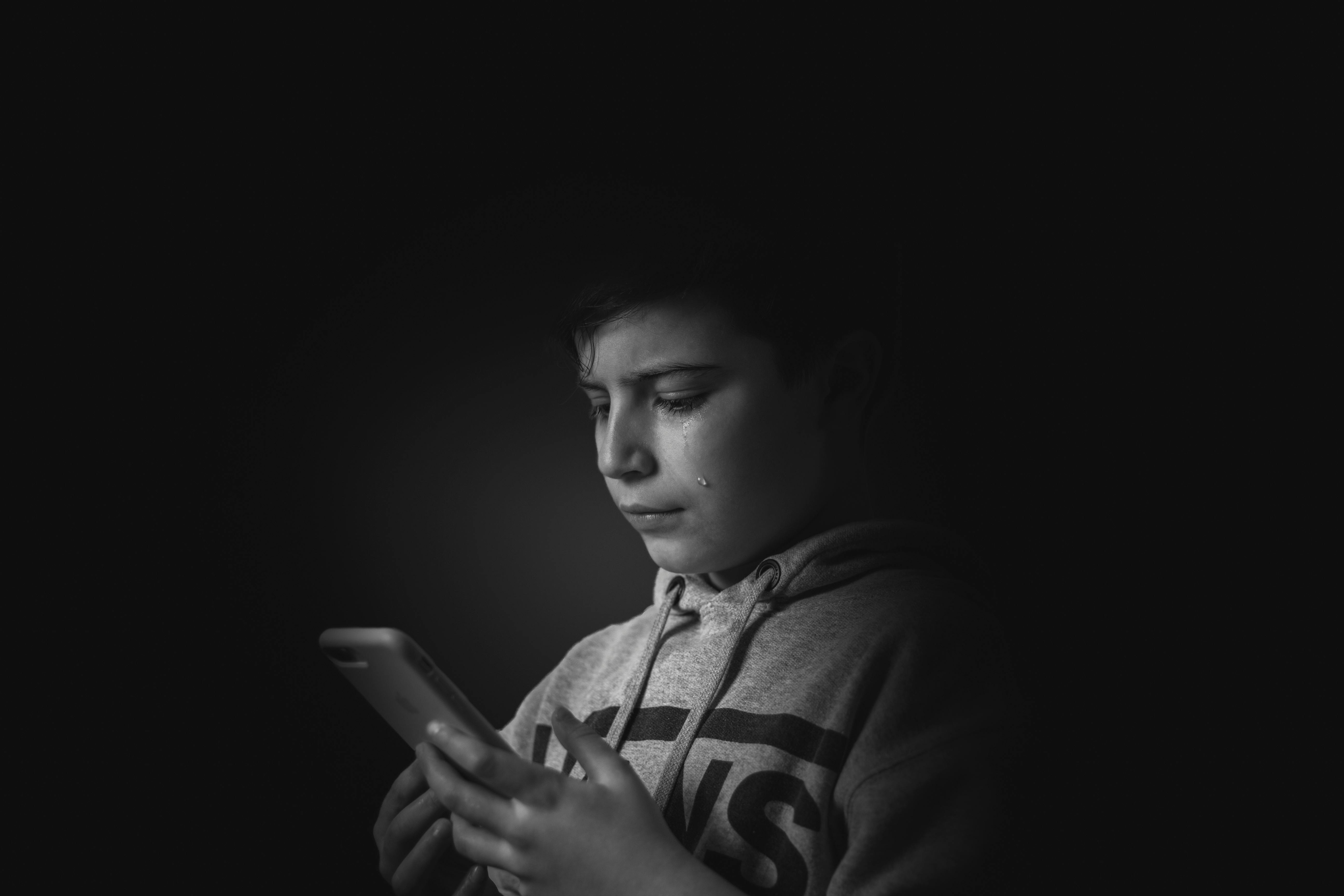
Helen writes, about a boy now aged ten:
M was referred to me about 6 months ago. He lives with his grandmother and has no friends. He hates school and prefers his own company. His mother left when he was 5. He has never known his dad. His grandmother is nice but as an older person is not open about mental health issues and other sexualities. She is not uncaring, she is just a person of her time. I have to thank M, as it is his issues that have helped me learn and reassess my views. Which as a mental health practitioner is important. M has [privately] identified as gay since the age of 7. He came out [publicly] 1 year ago. This is where his problems started. His teachers felt he was too young to identify as gay. His grandmother did not understand this. He started to get bullied.
M was referred to a mentor. Both in person and online. He started with the mentor and over time he was gaining confidence. His school work improved and he was more 'chatty'. He was able to relate to the mentor. Then one day at school a police officer turned up. M was removed from the school and taken to a police station. There he was questioned with care services being present. What had happened, to M he felt he was a criminal and that he was going to be sent to prison. This was before anyone had spoken to him. Over the next few hours, he was told he was not to blame and he must 'tell the truth' by both social services and the Police. Now they didn't bother to tell him why, and in his words he was 'dragged' to a police cell and sat in a cold room and told he must tell the truth. Remember he is 10. What had happened was that the police had arrested his mentor. He was arrested for having child porn on his computer. During their investigation they found photos of M in the mentor's bed. No nude photos, nothing sexual. However, they decided M must have been abused and this was why he was questioned. M reported to everyone that nothing horrible had happened but he was not believed. At the end of the session he returned to his nan. Who would not talk about it. She only said that she asked if the care services would be present at the interview and not her. M did ask when he could see the mentor again, he was told never. M was questioned many times. He said that nothing horrible happened to him and wanted his mentor back. The bullying increased at school and his nan refused to discuss any issues. M was assessed and referred to me for mental health support and treatment. I love it when they demand treatment.
Following my assessment, I could see no mental health condition apart from anxiety from his situation and the horror story that he had gone through with the police and the so called care services, and depression as he had lost what he saw as his only friend. This being the mentor. Now I did the normal things and could see that he was not lying to the police. That nothing horrible had happened. Once I told them, all their involvement ended as did the care services. Whilst a relief to M, he found it strange and felt their disappearance showed even more they did not care about him. I felt he was holding something back and agreed to see him as a private patient.
In theory if a patient tells me something that's not lawful I have to report it. However, I also have to do the best for the people under my care. The latter is what I stick to. That is my conscience and recently has become more important. To the reader, why then would I discuss what I am about to here? Well, it is my belief and indeed [the opinion of the patients] that these issues and what happened to them is important to be discussed in an environment that shows no one is alone. Therefore, I am guided by them.
Helen goes on to explain that M eventually disclosed he had been in a consensual sexual relationship with the mentor, one that was very much wanted - "the fact that his boyfriend was older, he did not care, and he felt a burst of energy when he was with him. He loved the goofing around and he loved him". This love and energy is something that I'm sure many boys would describe when interacting with me, platonically, at work. MAPs light up around kids, and kids around MAPs, and this means a lot to young people. The cynical masses will label it grooming, because they see kids as nothing but chattel and are blind to any beauty that is not expressed by appendages deep in orifices. But it is hardly a surprise to me - as a MAP and a friend of many other MAPs and our allies - that a boy felt uniquely loved by a MAP, whether that person may have expressed their feelings physically or otherwise. Anyway, from the perspective of the poor boy in Helen's care, the matter is simple. The system gave him a friend and mentor, then ripped that person away for their sexual heresy, likely making him feel somewhat guilty in the process.
In our personal communications, Helen was clearly quite upset about how there were many resources available for adult gay people, but not for gay youth. I can understand why gay organizations in the UK are terrified of interacting with those under the age of 18. The bizarre category of minor, which is almost as strong there as in America, no doubt makes everyone paranoid of ever doing or saying the wrong thing. Anti-MAP readers - and my blog certainly has a lot of those these days - will scream that MAPs are responsible for this. We aren't. Because it is not, and never has been, about truly protecting the young from harm, but about hunting an evil constructed from thin air. The raging masses would rather see a boy murdered than receive a blow job from an adult. It's pure insanity.
What are children like M actually supposed to do? They are shunned and abandoned by everyone, ranging from groups that are ostensibly intended to represent them, to professionals who are expected to function as their safety net yet fail at that single goal. Everyone is so self-obsessed with covering their ass that they're unwilling to do anything to help. A society simply cannot claim to be protective of children when its welfare system functions, or fails to function, so atrociously.
P's story
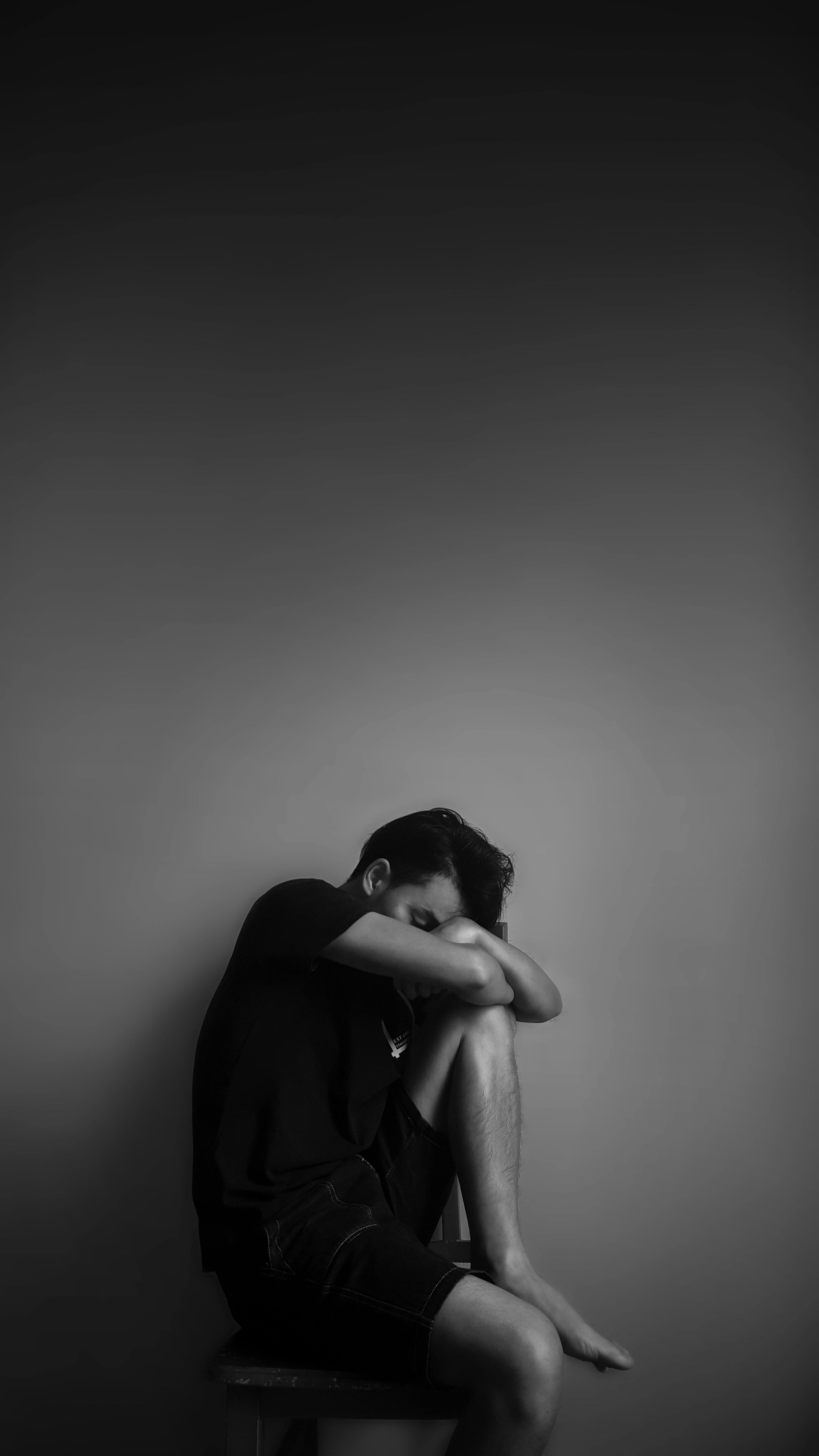
P is a 17 year old MAP. Many an American will be falling over themselves to scream that one cannot be a 'MAP' at that age. Why, they're still kids! That's what people said to me back when I was a teenage pro-pedophile activist in the 00s. But well, I liked young boys then, and I still like them now!
Helen writes:
He is 17 and was referred to me as he has a tendency to hang around girls ages 7 to 9 years old. Now he hasn't done anything with them. He just likes hanging around with them. However, his parents were concerned. Other parents referred him to the police and he was questioned. He tried to run away but was returned home. He felt like a villain. The police kept 'bumping' into him. He dropped out of school and started hurting himself.
[...]
His first discussion with me was how was I going to cure him. He has admitted that he is attracted to girls aged from 6 to 10 but goes off them when they develop. He says he would never force himself or hurt them and indeed wants to protect them. He knows he will never have a girlfriend. He has tried dating ones his own age but it doesn't work for him. So what am I meant to do? He has counselling from me to stop his self-harm.
Helping the young man with self-harm is the right thing to do, quite clearly. However, that is not the reason P was referred to Helen; indeed, the police reportedly didn't give a damn about that. Can you guess what the 'problem' was? If you guessed that it was his sexual orientation, you would be right! The hearts of the British police seemingly don't bleed for minors quite so deeply when those minors are attracted to other, younger minors. And I thought 'minor' was supposed to be a special, unique category...
When asked about what he wanted to do with a young girl, P described normal, non-sexual activities. This is of course very common for MAPs, our sexuality being the mentoring orientation it is. He did admit that he would like to have sex with a little girl, so long as it were consensual, though that is evidently not his main priority. But for all that P is not hellbent on hurting little girls, Helen is rightly concerned for his future. She adds:
Society has hurt him by causing fear and anxiety and seems hell bent of throwing him away due to there unproven fears. I said to him, to me, he seems a true gentleman. Again there is no support just him not feeling he has a future. Society [...] does not see a caring teen who has a passion for music, drama and the cinema. They see a teen who will become a danger to others. I do not see that. I hope one day he can find peace and love but I not sure that will happen in his lifetime.
I agree that he will not find peace and love. Not without much more radical and aggressive MAP activism.
Implications
Helen is very critical of the UK's system of mandatory reporting and diagnostic frameworks. She also believes that the ability to give meaningful consent varies person by person, rather than strictly by age, and she bases this on her observations of young patients as well as her own daughter. Some evidence suggests she may be correct.
But one thing that really upsets her, and myself in particular, is just how horribly the young people in Helen's care have been treated by a country that goes on and on about protecting children. Taking M and P's stories together, one can see that the well-being of young people is fundamentally ignored. The focus is instead on making sure that young people do not act in a way that isn't legally and socially sanctioned. Quite clearly, preventing feelings of disgust among adults is the main priority. And these feelings of disgust, not being in the interests of the young, represent nothing more proper or respectable than disgust toward a particular race, or gay sex, or women having lives outside of the kitchen. Perhaps this disgust is why the British government is so utterly obsessed with criminalizing anything and everything related to depictions of young-looking people in porn, including images made entirely by AI, and even by age-verified adults who act young.
When your own disgust gets in the way of doing the best thing for children, you're not righteous, but the monster to which you claim to be so vehemently opposed.