
How the Chair of NAMI Charlotte sold sensitive private discussions to TMZ
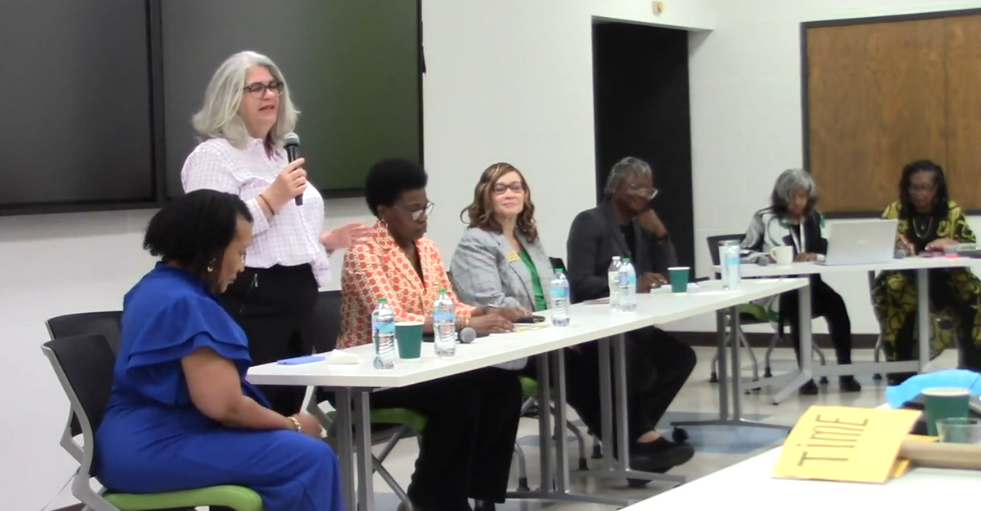
On May 13th 2025, Diana Merrifield of NAMI Charlotte sat on a panel of mental health advocates to discuss how laypeople can intervene to help individuals suffering with mental health issues. As its Chairwoman, she endorsed NAMI Charlotte's peer support program, where non-professionals struggling with their own challenges are given very basic training before going on to lead peer support groups. She argued that mental health affects the whole community, not just individuals. That's theoretically the crux of NAMI Charlotte's advocacy; involving the wider community to make support – whether professional or otherwise – available to all.
You'd think that as such, Merrifield would be an advocate of a site like LifeLine. Take a look at the about page:
LifeLine is a support chat for people who are attracted to children and adolescents. It is staffed by unpaid volunteers. We accept volunteers from all backgrounds, so long as they are willing to support and affirm minor-attracted people, contributing to better outcomes for our visitors and their communities.
In a world where accessing professional support is fraught with risk for our demographic, and where the feelings themselves are frequently treated as problematic, we provide something different by helping our visitors to live positively and responsibly with a sexual orientation that can never be extinguished.
We welcome casual chat between peers to the extent that it conforms with our rules. This helps our visitors to feel less alone, improving their mental well-being for the benefit of themselves and others.
Ironically, and shamefully, Merrifield is no friend of LifeLine. She is the very person who sold the photos of a celebrity allegedly using the service on an airplane, leaking its users' private conversations to the world.
Misunderstandings about LifeLine
In discussions about the LifeLine leak, both on YouTube and Reddit, the service is frequently referred to as a darknet or child pornography chat room. This likely stemmed from two observations:
- Merrifield's photos show the site being accessed via TorBrowser
- One of the comments refers to "BoyMoment galleries".
LifeLine is not a darknet site. It is publicly accessible at lifeline.chat, with no .onion address. Many of our members use TorBrowser to access the service because they're afraid of being outed as minor-attracted people. One need not be guilty of any crime to be absolutely terrified of being tarred with that brush. The consequences can be severe.
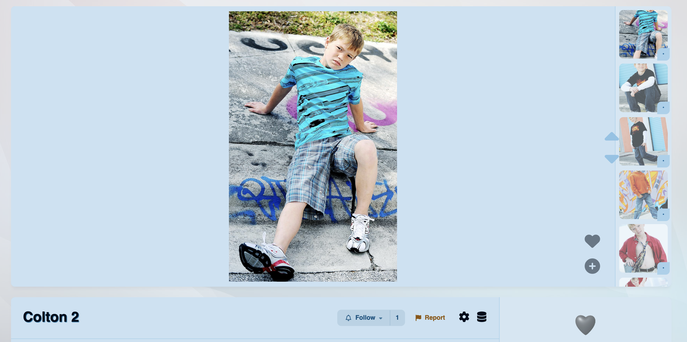
Furthermore, BoyMoment is not a child pornography site. It is a discussion forum that has a gallery showing pictures of cute boys, with clothes on, in natural poses. See the screenshot on the right.
LifeLine's broad purpose
I'll accept that the photos of the airplane passenger's screen do not look like therapy notes. The discussion is casual, consisting of commentary on news reports, silly jokes, and references to topics entirely unrelated to minor-attraction. Am I going to claim this is unusual for LifeLine? Not at all. That is a fairly normal chat session.
As a volunteer at LifeLine, I've participated in hundreds of discussions. They run the gamut from light-hearted to serious. But very serious discussions do happen, often via direct messages with a volunteer. Throughout LifeLine's 25 years in operation, we've counseled people from suicidal teenage pedophiles to older men struggling with crushing loneliness. We've persuaded people not to travel to poor countries to have sex with 'child prostitutes'. We've helped family members struggling with the revelation that a loved one is attracted to children. We've prevented suicides; I personally did so last year, when a father and husband was threatening to kill himself.
The light-hearted and jovial chats should also not be discounted. They are of huge importance in helping MAPs to feel less demonized and alone. If it were not for sites like LifeLine, MAPs would only hear that they're evil freaks who are destined to rape children. Being told that you're a good person who can live a happy and responsible life is much better for improving mental health and discouraging harmful behavior.
No good options
There are services for MAPs seeking professional support, at least in some countries. Unfortunately, most MAPs deem them unsuitable for a number of reasons.
- The focus of those services is on 'self-control', rather than on general mental health. Many MAPs seek help for the latter, which helps immensely with the former.
- There is a severe risk of being outed. A therapist may unilaterally decide a person should be reported; this happens often.
- Therapists working with the one genuinely safe resource, B4U-ACT, charge fees that are unaffordable for most.
So while there are technically professional options, there are realistically none for the majority of people. I do very much endorse B4U-ACT for those who can afford their recommended services.
Questioning the integrity of Merrifield and NAMI
Let's take a look at both NAMI and Merrifield as an individual.
The NAMI scandal
NAMI itself is no stranger to scandal or controversy. An investigation by Senator Charles Grassley revealed that it received roughly 75% of its funding from drug companies, and in turn focused on pushing new and expensive drugs as part of its 'advocacy'.
The organization has since sought to present itself as one that hosts peer support groups and training sessions. Sadly, the actions of Merrifield, representing its Charlotte branch, suggest this is little more than a charade.
Merrifield is a true Karen
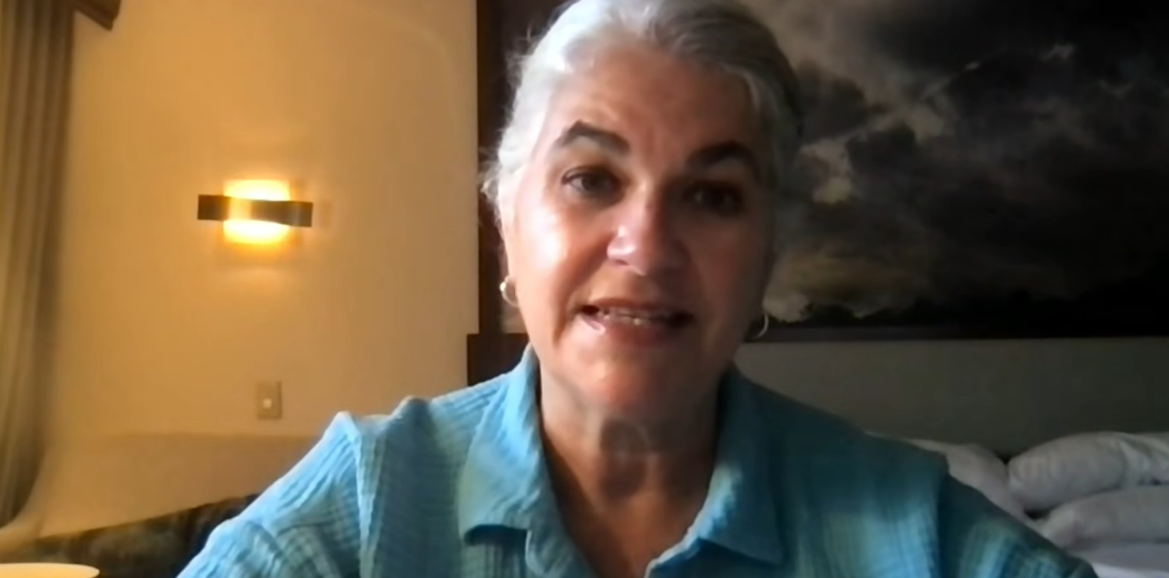
In her interview with Chris Hansen, Merrifield admits that she first started snooping on another passenger's laptop not because she believed there was a child safety concern, but because she was curious about the chat room's old-school layout and wondered what the man was doing. For those who are unaware, LifeLine uses this design because it doesn't require JavaScript, which would introduce a security risk for TorBrowser users.
I'm not the only person who feels this was an invasion of privacy. While there are many comments on YouTube supporting Merrifield, there are also a significant number criticizing her for using a phone to spy on other passengers for the sake of curiosity.
Merrifield is the very embodiment of a Karen. Toward the end of the interview with Hansen, she comments on how everyone needs to speak up if they see anything that looks even slightly off. She gives the example of how she freaked out over an adult in a ball pit, implying that people should be challenged as child molesters with even the faintest whiff of suspicion. This also attracted a notable backlash on YouTube.
Merrifield does care a lot about her own privacy, ironically. Her socials are locked down; a private Instagram, a Facebook profile with much of its content hidden, and a notably sparse LinkedIn page.
Not fit for purpose
Merrifield is a suicide prevention advocate, passionately espousing the importance of mental health support for all members of society. In parallel, she sold photos of discussions on a peer support and suicide prevention resource to TMZ, a Hollywood gossip site. She could argue, perhaps, that she wasn't aware of LifeLine's purpose. Yet the three months she had between taking and leaking the photos gave her more than enough time to find out. The URL is visible in the address bar, and lifeline.chat is a pretty strong hint.
I wonder how clients of NAMI Charlotte would feel about Merrifield's behavior? The organization hosts peer support groups, including sessions for LGBTQ youth. Might she potentially leak the content of those discussions as well? Do remember that her original purpose for snooping on the airplane was mere curiosity, not concern about child safety. Remember also that her bar for "saying something" is very low. This is not a woman who should be chairing an organization hosting sensitive support sessions. She simply cannot be trusted to mind her own business.
The fallout

The TMZ story led to a number of LifeLine volunteers and users disappearing. This means that people LifeLine might have diverted from serious outcomes – self-harm, suicide, or harmful behavior toward children – are no longer being diverted. That could quite realistically lead to harm to MAPs, to their loved ones and their communities, and to children.
I asked Merrifield and the NAMI Charlotte board what they thought about this, and whether they believe there is any class of people undeserving of support. I commented that her actions may have killed people or led to the sexual abuse of children. I asked also whether the selling of sensitive discussions to TMZ met the ethical standards of NAMI Charlotte. Unsurprisingly, I have so far received no response.
Implications
My writing is sometimes discussed on social media by critics. That includes the articles posted on my site and on Mu, as well as the content I ghostwrite. The press release I wrote for LifeLine was distributed very widely, and criticized by many for claiming that MAPs have no safe access to support. A number of people argued that therapists are required to maintain confidentiality unless there is an imminent risk of criminal behavior.
The actions of Merrifield, chairing the very sort of resource a MAP might be referred to, couldn't be more timely. They demonstrate how MAPs truly cannot trust support groups outside of their own community, no matter how promising one might seem. To seek support from outside the community is more dangerous than a game of Russian Roulette.
Many MAPs are genuinely in need of counseling. Not because they need help with self-control, but due to other concerns such as loneliness, anxiety, depression, rage, and suicidal ideation. This is made much worse by the all the hateful discourse surrounding MAPs who have never even committed a crime. Knowing that most people want to kill you for your feelings isn't great for mental health.
We've seen in the case of Nicholas Prosper what can happen when there's nowhere to turn. He was taken by his mother to a therapist, but reportedly did not cooperate, presumably because he was terrified of disclosing his sexual orientation. Even the MAP community couldn't help him due to his extreme behavior. He ultimately murdered his family, and came very close to doing something even worse.
The situation surrounding MAPs seeking therapy needs to change radically, and those who make access harder – like Diana Merrifield of NAMI Charlotte – must be thoroughly condemned.
If you need mental health support as a MAP, please reach out to B4U-ACT, LifeLine, or myself. We will treat you with respect, while helping you to lead a responsible, law-abiding, and fulfilling life.